With a current grocery market share of 16%, Sainsbury’s is the second most popular supermarket chain in Great Britain (Wunsch, 2020). This success has largely been down to their ability to pioneer the technology of tomorrow. Whilst many shop in a conventional brick-and-mortar fashion, Sainsbury’s has identified the importance of adopting a more future-proof digital business model. Social, mobile, analytical and cloud (SMAC) technologies are, in my opinion, the four most fundamental components to Sainsbury’s success.
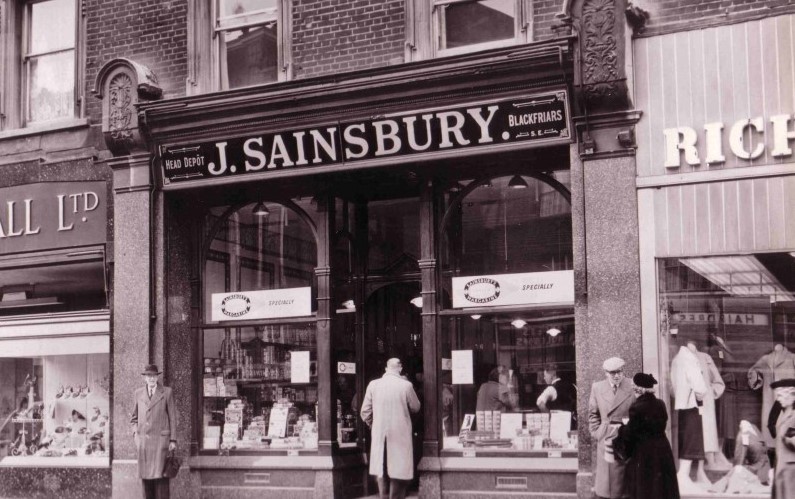
Social. Sainsbury’s use of social technologies is both creative and effective. From their comedic to instructive YouTube videos, to their incredibly responsive Twitter feed, Sainsbury’s has embraced most social media platforms. Creating a strong online presence is vital for a company, not only for managing complaints but for increasing customer interest and spending. For instance, Sainsbury’s made a profit of £24 for every £1 they spent on their 2014 Christmas advert (Rodionova, 2016).
This social aspect is not limited to customers, however; employees are also using social digital platforms, such as Sainsbury’s own social network called Yammer, which allows staff to express concerns and feelings anonymously. This effective use of technology for staff and customers has had remarkable success, with them being deemed ‘the most socially influential UK retail brand’ in 2014 (Briggs, 2014).
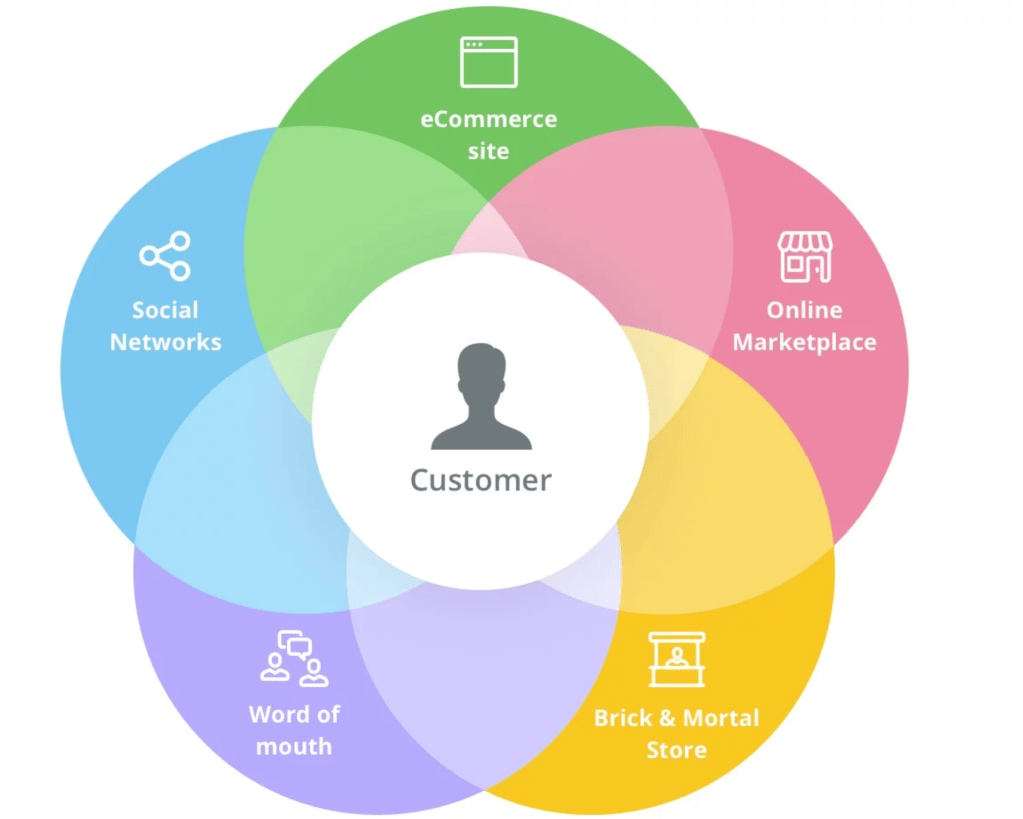
Mobile. Nowadays, having an online presence is nothing special, however, a recent unique shift in the structure of Sainsbury’s has been ambitious yet effective. Upon purchasing Argos in 2016, Sainsbury’s and Argos have made the transition to a customer-centric, omnichannel approach (SupplyChainBrain, 2017). This strategy focuses on the consumer, with all their communication channels holistically operating to deliver the most personal and engaging experience possible. With online sales increasing from £500 million in 2010 to £5 billion in 2019, this approach is clearly effective (Sainsbury’s, 2019, p. 5). In addition, the sharing of resources, such as staff and delivery networks, has been incredibly beneficial, with savings of £160 million due to synergies with Argos (Sainsbury’s, 2019, p. 81).
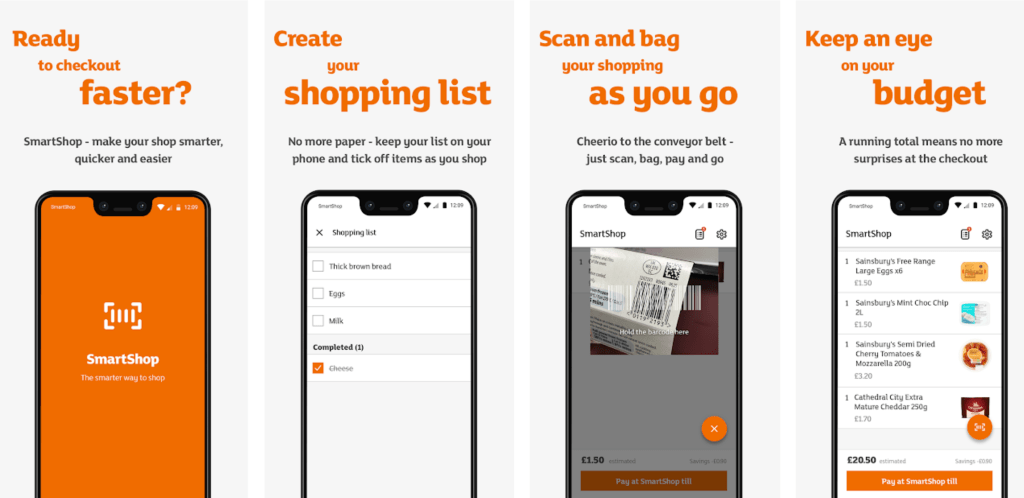
A benefit of this omnichannel strategy is the breaking down of walls between the digital marketplace and the physical marketplace. For instance, in April last year Sainsbury’s introduced the UK’s first till-free store (Glenday, 2019). This allowed customers to enter the shop, scan items using the Sainsbury’s SmartShop Scan app, and then pay from their phone as they leave. SmartShop has since been implemented in over 100 shops (Sainsbury’s, 2019, p. 9). Not only do SmartShop customers spend 18% more than regular shoppers, they also receive exclusive promotions as they shop, such as wines that complement the meal they have just scanned, or Sainsbury’s burgers to go with the Argos BBQ they just picked up (Macaulay, 2019). I believe this to be the perfect balance between efficiency and productivity, whilst still maintaining the human interaction customers are so fond of.
Analytical. The analytical side of Sainsbury’s is massive, with huge value being added to both the colleague and customer. The collection and analysis of millions of spending habits can provide tailored predictions and promotions for customers, increasing their brand loyalty and supporting shopper retention. Whilst this all seems very standard for a supermarket, I was shocked with its intricacy and effectiveness. Just last week, my Sainsbury’s app pinged an offer on teabags to me. It had been a month since my last in-shop purchase and Sainsbury’s (rightly) thought it was about time I restocked, gaining themselves extra sales, and me, extra tea, win-win! In addition, having recognised that those who shop both online and in-store spend 2.4 times more than those who shop purely in-store, offers and rewards are given for multiple channels, encouraging engagement with Sainsbury’s most profitable avenue (Macaulay, 2019).
When not suggesting teabags to me, this technology is used in countless other areas of the company, from informing farmers on how to grow better lettuce, to optimal product arrangements in stores. Andy Day, the chief data officer, aptly states the motivation for this: ‘In a business that turns over close to £30 billion, you only have to move some of those small levers a tiny bit to make a significant difference.’ Day is embracing the importance of data, with a goal of employing 700 data specialists for Sainsbury’s (Bennett, 2017). I believe this mindset and embracive approach has been (and will continue to be) paramount to their success.
‘In a business that turns over close to £30 billion, you only have to move some of those small levers a tiny bit to make a significant difference.’
Andy Day – Sainsbury’s cdo (Bennett, 2017)
Cloud. Cloud technology is the fundamental enabler for the previous three technologies. It allows companies to collect, store, and interpret vast sums of data, without requiring the in-house infrastructure to do so. In 2019 Sainsbury’s announced their utilisation of Google Cloud, allowing for their social genius, omnichannel excellence, and analytical effectiveness to thrive (Coad, 2019). Without the cloud, a company’s digital business model would struggle. However, the difference between a well-optimised cloud system and a flawed one is where the success of Sainsbury’s lies.
Enhancing these four technologies has been revolutionary for shaping and moulding the digital business model that has allowed Sainsbury’s to thrive and will likely continue to pave the way for their future success.
References
Bennett, M. (2017, June 12). Sainsbury’s has an appetite for data analytics. Diginomica. https://diginomica.com/sainsburys-appetite-data-analytics
Briggs, F. (2014, November 25). Sainsbury’s is most socially influential UK retail brand, new ranking finds. Retail Times. http://www.retailtimes.co.uk/sainsburys-socially-influential-uk-retail-brand-new-ranking-finds/
Coad, A. (2019, October 2). How Sainsbury’s is generating new insights into how the world eats. Google Cloud Blog. https://cloud.google.com/blog/topics/customers/how-sainsburys-is-generating-new-insights-into-how-the-world-eats/
Glenday, J. (2019, April 30). Sainsbury’s follows in Amazon’s footsteps with checkout-free store. The Drum. https://www.thedrum.com/news/2019/04/30/sainsbury-s-follows-amazon-s-footsteps-with-checkout-free-store
Macaulay, T. (2019, October 3). Sainsbury’s CDO unveils digital shopping vision. CIO. https://www.cio.com/article/3526180/sainsbury-s-cdo-unveils-vision-for-future-of-shopping.html
Rodionova, Z. (2016, November 8). Christmas adverts 2016: How much are John Lewis and Burberry spending on your favourite ads and why? | The Independent. Independent. https://www.independent.co.uk/news/business/news/john-lewis-burberry-christmas-advert-2016-budget-costs-sainsburys-lidl-a7404211.html
Sainsbury’s. (2015, February 3). Spencer Matthews tomato stunt | Comic Relief | Sainsbury’s. https://www.youtube.com/watch?v=C_xnLOs7CjI
Sainsbury’s. (2019). Sainsbury’s Annual Report and Financial Statements 2019 (p. 192). https://www.about.sainsburys.co.uk/~/media/Files/S/Sainsburys/documents/reports-and-presentations/Sainsburys_AR2019.pdf
Sainsbury’s. (2020, March 2). Sainsbury’s SmartShop – Apps on Google Play. https://play.google.com/store/apps/details?id=com.sainsburys.ssa&hl=en_GB
SupplyChainBrain. (2017, December 19). How Argos Transformed Its Store Network for the Omnichannel. https://www.supplychainbrain.com/articles/27350-how-argos-transformed-its-store-network-for-the-omnichannel
Wunsch, N.-G. (2020, February 28). Great Britain: Grocery market share 2015-2020. Statista. https://www.statista.com/statistics/280208/grocery-market-share-in-the-united-kingdom-uk/
X-Cart. (2019, February 18). Dive in Omni-Channel Retailing to Level Up Your eCommerce Business. X-Cart. https://www.x-cart.com/omni-channel-ecommerce.html


Hi James, really like your post on Sainsbury’s as this is around my daily life. The SMAC technologies you mentioned are great and I agreed that they had a great contribution to the success of Sainsbury’s. It fundamentally changed the traditional way of food shopping and enhance the relationship building between consumers and the business. I have heard about the smartshop app before, but I have never used it as I think it might be annoying and time-consuming when you have your basket or trolley, and you need to select the food and then also scan them with your phone, especially during the peak hours with so many people around you. However, I would like to try at least once after reading your blog post. As it is common to see people also queuing at the self-checkout, using smartshop could save some time to some extent.
LikeLike
Hi James, I am glad to read your article. I appreciate your positive tone and proper wording. The whole article makes me feel better about this company. Here I would like to ask, you mentioned algorithms and digital technology, how to distinguish between optimization and flaws? And, as many supermarkets are beginning to popularize digital technology, how Sainsbury stands out? You mentioned a lot of interesting points. My question is also to discuss with you, and I look forward to your reply.
LikeLike
Hello James,
Thank you for your blogpost.
This is my first time to hear that grocery store has employed modern technology as part of its business operation. Particularly, allowing customers to self-checkout by using smartphone. It is truly groundbreaking technology for customers since they could save time rather than being struck in the long queue. Moreover, it also allows me to check the price tag since the price tag is not available on the shelve in some occasion. However, from my perspective, there might be some cases which could not be applicable with mobile payment. For example, I want to buy a bunch of bananas, which does not have a barcode and require me to put on the weighting scale at the counter. In this case. Do you think how the company tackle this problem?.
As for Social aspect, from my personal experience when I was working at former multinational company, it has also employed Yammer for internal use which is good for employees to express their view online such as feeling, feedback or complaints. Therefore, I would agree that it is a big contribution to company successes because the management team could adjust or improve performance based on the feedback.
Lastly, analytical part has amazed me shockingly, since it knows that when I should replenish my items. It is a very good system to remind and retain customers to go back and buy items at their stores over and over again. Therefore, I am motivated to start downloading Sainsbury’s app and going shopping with mobile payment.
LikeLike